
How to Write a Book -- Part Two
/Part II- Some Tips that Helped Me Along the Way
1. Slow Down
Dreaming of my finished book made me want to hurry the process. But to everything there is a season and the writing could not be rushed. Some days you will be prolific and others, not so, but just showing up, even if you stare at the computer screen is akin to planting the field. Trust the process. Words will sprout and flourish, if you are persistent at showing up.
I remember the sage words of a man I admired, Klaus Hill, who unfortunately died in a plane crash in 1973. He was a heavily accented light boned German guy who walked with a bounce in his step. He lived in the nearby mountain town of Morgan, Utah and dedicated his life to flying and designing one and two seat airplanes. While visiting him in his workshop with all the parts strewn about, I remember him saying that if you just work a little each day, in a year, you will be soaring above the mountains in your little plane. He was an inspiration to many home-builder-pilots.
2. Use the Right Tools
I use a Mac Book Pro— I think the Mac Air would also be an excellent choice. I have used a PC and find the Mac incredibly reliable. It never freezes up or gets bogged down scanning for virus’s. Apple support is five star. You get to talk to English speaking, friendly, knowledgeable techies. The software I use is Microsoft Word for Mac. I get giddy over the: Document Map Pane. Get to it while you are in the Print layout view; then go to: View-Sidebar-Document Map Pane. Then highlight your section headings and click Heading 1 (this is found off the home tab under styles). A list called the Document Map Pane will show up on the left side of your screen. You can click on any chapter or heading to go there quickly and it gives you a nice overview. If you want to just jot down ideas for a later chapter, you can insert chapter titles that contain that subject matter. Another great reason to use Word is that many vendors have simple tools to convert a Word document into an e-book. I have not used Apple’s Pages, but I suspect this would be another good choice for writing.
Some writers use Scrivener. During a time of writing confusion I yearned for real structure, so I downloaded a free trial of Scrivener. It was fun using the spiffy note cards and switching from outline to composing views, but I found the learning curve steep and it took away from my actual writing so I let the free trial expire. Note: Since I wrote this blog post, I have returned to Scrivener and love it for it's ability to easily name and move chunks of writing around.
3. Foster Patience and Get the Right Help
A jolt of excitement ran through my veins whenever I envisioned the book cover and the weight of the completed pages in my hands; the day when I would be done with the uncertainty— finally handing it over to readers.
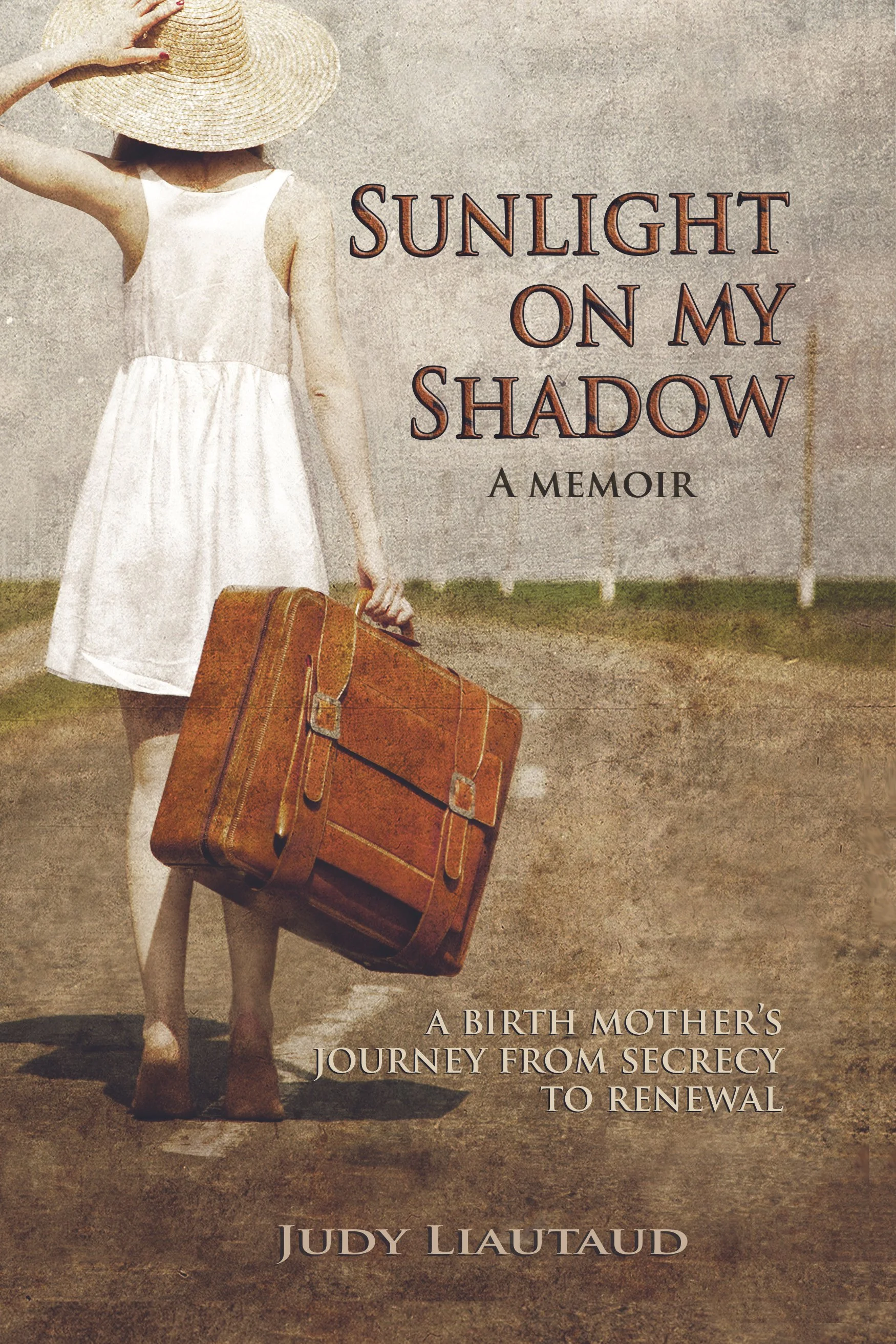
At least 3 times during the 4 year process of writing Sunlight on My Shadow, I thought I was almost done. The first time I gave my book to Paulette Alden, an accomplished scholar, author, and writing teacher, for critique--PauletteAlden.com. I waited a long 6 weeks until she could fit me into her schedule. I was secretly hoping she would say great job—send it to the printers! The thing about your own writing is you never know if it is any good. But being the expert genius she is, she applauded me for getting my story on paper. There was more work to do—study up on dialogue—carry themes through—tighten it up. She gave me specific examples of how to do these things with printed excerpts from books. She also recommended books for me to read that were good examples of what she was trying to teach me.
Then about a year later I asked Elizabeth--ElizabethJarretAndrew.com— to give it a read. I told her that people were saying that the beginning of the book was less engaging than the second half. She suggested this was because I wasn’t using the reflective voice. She recommended that while writing of my younger years—ie. visits to the confessional—to add what I think of that now as I look back. I did this in several places and spent the winter and spring working on this aspect. It added depth, I believe, and made the reader more able to relate to the author.
Each time I gave the book to Paulette and then Elizabeth, I thought I was done and just wanted some final critique, but their comments made it clear that I had more work to do, adding two more years to the revision process. Finally, I gave the book to a copy editor who added the commas and corrected things like use of the word lie and lay, etc.
4. Learn to love the process
If you love the process you will have more patience. I can almost get in an altered state that feels like meditation when things are rolling. I love it when I come away satisfied and refreshed—like I wrote what mattered. My husband Joe sometimes asks me when he gets home from work; “Did you write today? Because I like it when you write, it makes you happy.” He sees the difference in me.
To get in this meditative state, I stop my mind from extraneous thoughts, tune in to the deepest part of my heart and feel the whole experience. Then, I pull the words from the mind’s library to match the sight, sound, smell, or touch of the moment.
Slow down. Dig Deep. This makes writing more enjoyable.
Use details. Instead of the flower was so pretty; the red tulip had drops of dew sparkling on the petals. When you are writing to just get it done, words lose their punch because writing detail takes time and reflection.
5. Always Write for Yourself — not your teacher, mother, or idol.
When you write what you think others want to hear it takes the wind out of your sails and the words go flat.
The best writing comes when the internal censor is obliterated. I had to pretend no one would be reading my book. I tried to forget about what my mom or dad might think—even though they were dead—I still heard their judgments ringing in my head. When I worried about what others might think, the words came out like a rattle of tin. I had to continually ask myself, is this my truth? Sometimes it takes some writing to really know what is in your heart but this is where the tweaking comes in. When the writing is done, you can always go back and edit to make words more true, more gentle, and less offensive if needed.
6. Write and Rewrite.
Annie Dillard says, “Process is nothing; erase your tracks. The path is not the work. I hope your tracks have grown over; I hope birds ate the crumbs; I hope you will toss it all and not look back.”
Revising is the most fun of all because you have done the hard part of getting the ideas down and now you can go back and find verbs that pop and you can cut out the wasted words. Like cleaning house; a good feeling to get everything in it’s place or tossed away. My personal challenge is that I love to say the same thing in a couple different ways. This adds clutter. No need to pound things home. I cut about 40% of my book before it went to press and probably could have done more. Remember what you write can always be adjusted, deleted, or expanded upon. Keep the pen moving- or keys tapping.
7. Let the Book Sit and Marinate
When you look at something over and over, you just can’t see the edits properly. Give it a week or two and then pick it back up and take a read. This simmering time allows the mind to reset and you can view the book with new eyes. Work on another writing project for a few weeks and be sure to keep up the morning pages.
8. Find a Theme and Stick to It.
Ask yourself why am I writing this? Who cares? What is the point? Write 1000 words answering these questions and you will begin to sift out the nugget. Then as you write, make sure you are always accomplishing your objective. Don’t wander off so the reader has to wade through fluff. For instance, it may seem obvious to you but it took me a good year of writing before I realized my book was about my teen pregnancy. I had some cute little childhood stories about stealing candy from the drugstore or making friends with the little neighbor who rode by my front porch on a two wheeler with training wheels. But what did that have to do with my teen pregnancy? I cut them. I considered these stories a form of procrastination. They kept me from getting to what really mattered. But even though they were cut, they had value as a kind of rehearsal. As William Faulkner said, “In writing, you must kill all your darlings.”
WRITE! — Even Though You Are Not Sure Where You Are Going
There are a couple approaches to compiling a book. One novelist will use a well-planned outline while another will just write and the ideas materialize. This is called discovery writing. I learned these terms when Chuck Shingledecker, author of The Crazy Side of Othodoxy and Freedom to Doubt had a workshop on outline and discovery writing at the St. Croix Writer’s Retreat at Camp Jackpine, fall of 2013.
I realize I am a discovery writer. When I wrote Sunlight on My Shadow I gradually learned what my book was about by writing it. I remember wanting to find a title so I could have something to tie the book to… I had pages and pages of titles, but it wasn’t until I was about done that I was able to title it. In the early stages my book went from a story of my teen pregnancy to a story of acceptance for my shady past and forgiveness for others and myself. It was about the damage done by keeping secrets. I couldn’t have discovered that in any outline that I produced at the start. So allow yourself, the freedom to just write. Your pearls will be crafted in the process.
So the bottom line is to remember that there is no right way to write but your own. As Nike once said, just do it.
Inspiring Books and Blogs on Writing
1. Steven King’s On Writing-part autobiographical-this book tells of King’s process to get where he is today. After reading this book, I came away thinking— I can do this. He is not a proponent of taking writing classes or having many people look over your work.
2. Bird by Bird by Annie Lamott—the principal of Annie’s book is that you just do it little by little. Kind of like Klaus’s philosophy.
3. An Old Friend From Far Away by Natalie Goldberg-this book taught me how to use details and use awesome descriptions.
4. Writing Tools: 50 Essential Strategies for Every Writer by Roy Peter Clark Before I read this, I could intuit good writing but this book taught me why the writing was good and helped me apply these tools to my own writing.
5. War on Art by Steven PressfieldThis book taught me to accept resistance as part of the process and made me more comfortable with it so I can pass through more easily. He likes to use myth philosophy, somewhat like Joseph Campbell. I get a little lost during these descriptions but chalk that up to my lack of familiarity with myth.
6. Writing by Brenda Ueland I love everything about Brenda Ueland. She is so down to earth and makes you feel like you can write. I found her book very readable and inspiring.
7. Tell it Slant by Brenda Miller and Suzanne Paola. This book is about being creative in your choice of words. Don’t write straight up, but come in from another angle.
8. Why We Write by many good writers, edited by Meredith Maran. The theme I got from this book is that writers don’t make a lot of money easily. Also, for some it is a torturous process. Like they are compelled to write but sweat blood with every word. I liked hearing about the every day lives of these well known writers and what they get from writing.
9. Another great resource is Mary Carroll Moore’s Blog. She is an artist, author, and writing teacher and posts regularly on the craft of writing. Visit her site here: http://marycarrollmoore.com
10. http://paulettealden.com Paulette is the author of several books and has been traditionally published and self published. She takes her blog readers along on her discovery of how-to self publish and what she has learned along the way. She also does some book reviews. Her blog posts are delightfully humorous and informative.